Links marked * may earn us a commission at no extra cost to you. We do not provide financial advice. How we make money.

Guide

UK Sustainable Aviation Fuel (SAF) Mandate 2026: What It Means for Your Ticket

By Emma Walsh 10 min read
Quick Answer

The UK Sustainable Aviation Fuel Mandate obliges suppliers to blend rising shares of SAF into UK jet fuel — starting at 2% in 2025, reaching 10% by 2030 and 22% by 2040 (GOV.UK). That cost sits with fuel suppliers and airlines.

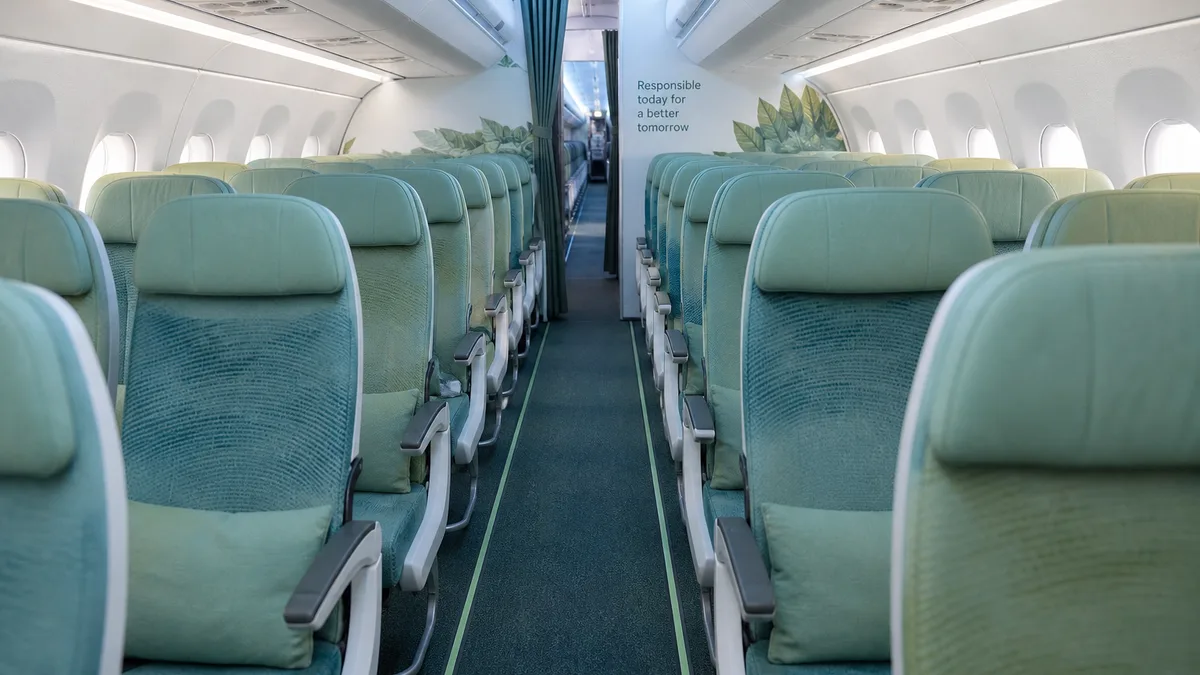
Modern aircraft cabin suggesting cleaner aviation — UK sustainable aviation fuel mandate and tickets guide (AI-generated illustration)
Image: FlightLogic (AI-assisted editorial render)

What SAF is (and is not)

Sustainable aviation fuel is jet fuel made from approved non-fossil feedstocks (waste oils, residues, and other ASTM-certified pathways) that can run in today’s engines when blended with conventional kerosene. Lifecycle CO₂ can fall sharply versus fossil jet — industry briefings often cite up to ~80% for well-documented pathways — but the cut depends on feedstock and processing, not on the word “SAF” in a booking email.

Sustainable aviation fuel is jet fuel made from approved non-fossil feedstocks (waste oils, residues, and other ASTM-certified pathways) that can run in today’s engines when blended with conventional kerosene. Lifecycle CO₂ can fall sharply versus fossil jet — industry briefings often cite up to ~80% for well-documented pathways — but the cut depends on feedstock and processing, not on the word “SAF” in a booking email.

SAF is not a guarantee that your seat flew on 100% alternative fuel. Compatibility rules still usually limit blends (commonly up to 50% with conventional Jet A-1). Airframe and engine makers are working toward 100% SAF capability around the end of the decade; that is a certification roadmap, not today’s default at the gate.

UK mandate vs EU ReFuelEU

United Kingdom: the SAF Mandate sets rising obligations on aviation fuel suppliers for fuel used in the UK. Public GOV.UK material describes 2% in 2025, rising linearly to 10% in 2030 and 22% in 2040. That is a supply-side rule — you do not apply for SAF the way you apply for ETIAS.

United Kingdom: the SAF Mandate sets rising obligations on aviation fuel suppliers for fuel used in the UK. Public GOV.UK material describes 2% in 2025, rising linearly to 10% in 2030 and 22% in 2040. That is a supply-side rule — you do not apply for SAF the way you apply for ETIAS.

European Union: ReFuelEU Aviation sets separate blending steps for fuel suppliers at EU airports (industry summaries commonly quote 2% in 2025, 6% in 2030, climbing toward mid-century). A UK–Spain holiday can therefore sit under UK rules on the outbound uplift and EU rules on the return depending on where fuel was uplifted — another reason not to treat one airline badge as a global carbon receipt.

Industry bodies such as the Air Transport Action Group (ATAG) publish global SAF production tallies and net-zero pathways (Waypoint 2050). Use those for scale; use GOV.UK / EU Official Journal for what actually binds your departure market.

Will this show up on my fare?

Probably as gradual fare pressure, not a named “SAF tax” on every ticket. Fuel is a large airline cost; mandates raise the average cost of compliant fuel. Some carriers already experiment with voluntary SAF surcharges or corporate programmes — those are commercial choices, separate from Air Passenger Duty.

Probably as gradual fare pressure, not a named “SAF tax” on every ticket. Fuel is a large airline cost; mandates raise the average cost of compliant fuel. Some carriers already experiment with voluntary SAF surcharges or corporate programmes — those are commercial choices, separate from Air Passenger Duty.

Compare like with like: a cheaper fare via a third-country hop may dodge UK APD but still burn jet fuel somewhere else. For APD mechanics see our Air Passenger Duty answer. For booking hygiene see How to book flights (UK).

How to read airline “green” claims

Useful: seat map, aircraft type, schedule reliability, baggage rules, and whether a carbon offer is an optional purchase with a named methodology.

Useful: seat map, aircraft type, schedule reliability, baggage rules, and whether a carbon offer is an optional purchase with a named methodology.

Weak: vague “powered by SAF” copy without a blend percentage, year, or third-party standard; cabin upcycling stories that do not change your flight (Emirates retrofit vs upcycling); offsets sold as “making this flight carbon free” without saying they are compensation, not elimination.

If you want a rough CO₂ estimate for a route, use a transparent calculator (for example IATA’s passenger tools) and treat the number as an estimate — occupancy, routing and aircraft type all move the result.

What UK travellers can actually do

1. Prefer non-stop when it fits — a large share of aviation CO₂ sits on longer sectors where rail is not a substitute; unnecessary connections still burn fuel.

1. Prefer non-stop when it fits — a large share of aviation CO₂ sits on longer sectors where rail is not a substitute; unnecessary connections still burn fuel.

2. Ignore vanity badges; check the product — hard product and rights matter more at booking than a green icon.

3. If you buy an offset or SAF contribution, keep the receipt and read whether it is a voluntary airline programme or a third-party project — and never confuse it with UK261 care/compensation rights.

4. Reconfirm policy on GOV.UK SAF Mandate before citing percentages in 2027+ — blend steps can be amended.

Before you pack — pre-trip essentials

Flight and hotel links convert late. Finance, FX, insurance, and gear decisions happen weeks earlier — when professionals budget for long-haul stays. These picks fund FlightLogic without touching editorial scores.

Frequently Asked Questions

What is the UK SAF mandate?

A legal obligation on aviation fuel suppliers to include rising shares of sustainable aviation fuel in UK jet fuel — publicly described as 2% in 2025, 10% by 2030 and 22% by 2040. Confirm current steps on GOV.UK.

Will SAF make my flights more expensive?

Over time, higher compliant-fuel costs tend to feed into fares or optional green surcharges. You will not usually see a separate government “SAF tax” line the way you see Air Passenger Duty.

Does a SAF badge mean my plane flew on 100% SAF?

Almost never today. SAF is typically blended with conventional kerosene (often up to 50%). “SAF flight” marketing usually means participation in a book-and-claim or blend programme, not neat SAF in your specific tank.

Is SAF the same as carbon offsetting?

No. SAF changes the fuel mix; offsets pay for emission reductions or removals elsewhere. Both can appear in airline “green” offers — read which one you are buying.

Where can I learn the basics of SAF?

See FlightLogic’s plain-English explainer at /learn/what-is-sustainable-aviation-fuel/ and the full mandate guide on this page.

FlightLogic Resource Library

Our calculators, claim checklists, and evergreen guides are updated when rules change — bookmark them so you are not dependent on a single search result.

Independent reviews — some links earn commission. Affiliate policy

Written by Emma Walsh

Editor, Hotels & Europe

Emma reviews boutique and independent hotels across Europe, alongside British Airways and Oneworld product reviews. She writes FlightLogic's Avios redemption guides.

87+Reviews
410K+Miles Flown
22Countries
5 yrsCovering Travel